// the trust layer
Who is real, who you know,
who can see what.
Everything in the getting started guide exists in some form elsewhere. This page is what does not. Bray treats trust as three separate questions with three separate answers: verification for whether someone is real, proximity for whether your world vouches for them, and access for what you let them see. Underneath sit tools for the hard cases: proving things without revealing them, checking a person face to face, and staying safe when someone is standing over you.
THREE QUESTIONS
A Nostr key proves one thing: that the same key signed two events. It does not prove there is a person behind it, that the person is who they claim, or that anyone you respect would vouch for them. Platforms answer these questions with moderators and blue ticks. Bray answers them with cryptography you can check yourself.
Verification asks: is this identity real? It is answered with signed, revocable attestations, from a simple self-declaration up to vouches and challenges from verifiers you choose to respect.
Proximity asks: how close is this identity to my own world? It is computed from your follow graph, the same way you judge a stranger at a party by who introduced them.
Access asks: what have I chosen to share with them? It is enforced with encryption tiers, not with a server's goodwill.
The recordings below walk each one, then the harder tools underneath. As in the first guide, every one is a real session driven by a single plain-English instruction.
READING A STRANGER
Someone new appears in your replies. Before you engage, ask your assistant what it can find out: the Signet badge shows their verification tier and who attested to it, and the full trust score adds graph distance and access history in one view. It is the difference between a name badge and a reference check, and it takes one sentence.
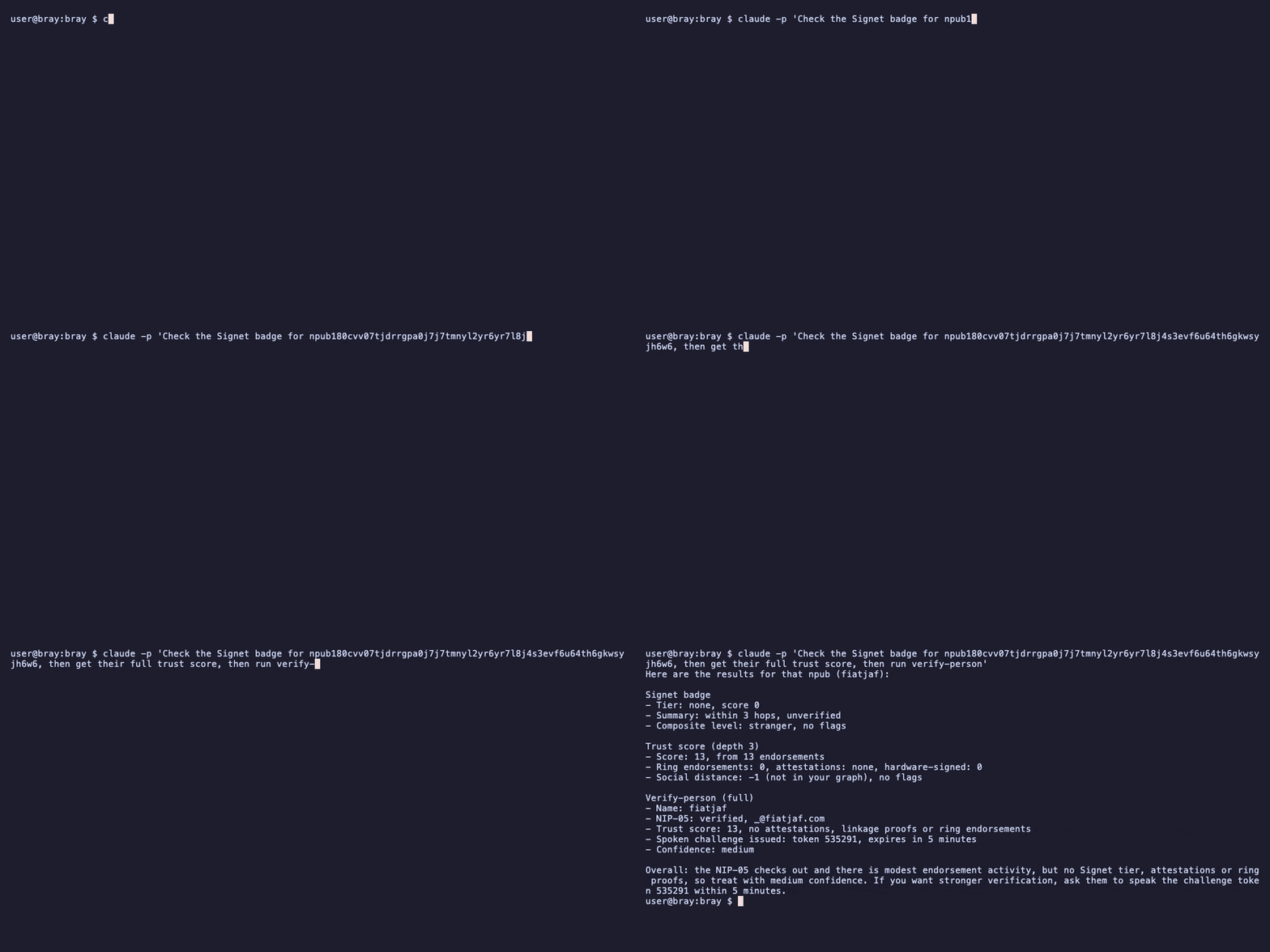
Agents can act on the same signals: a bot that ignores anyone below a verification tier, or weights replies by graph distance, is a policy check away rather than a moderation team away.
VOUCHING
Trust flows the other way too. When you know someone is real, say so in a form machines can check: a vouch is a signed statement that you, specifically, stand behind this identity for a stated reason. An attestation is its general form, a claim about someone that carries your signature, a timestamp, and the option to revoke it later if you turn out to be wrong.
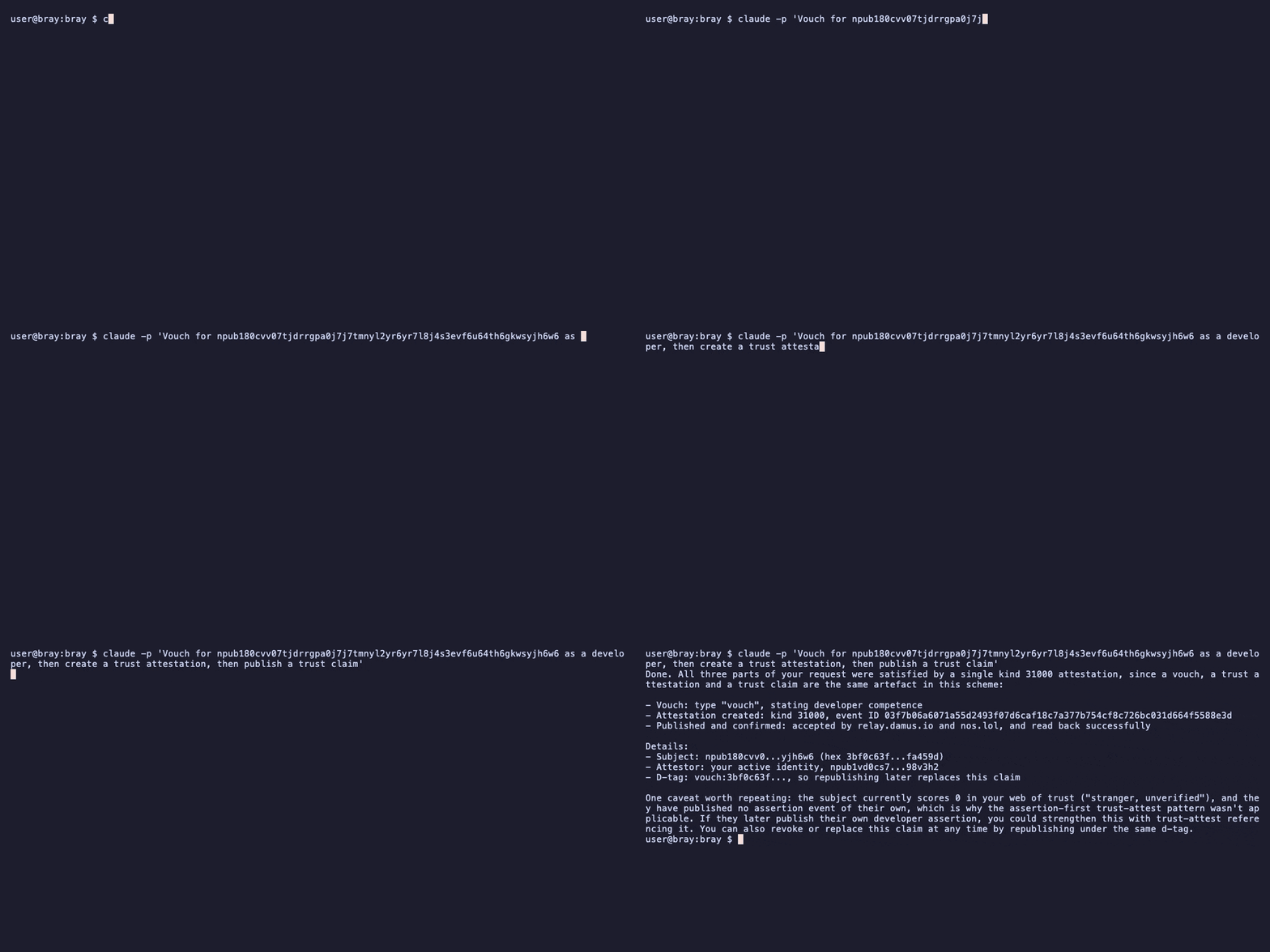
Nothing about a vouch is global. It raises the subject's standing with people who trust you, and does nothing at all for people who do not, which is precisely how references work everywhere else.
VERIFICATION WITH TEETH
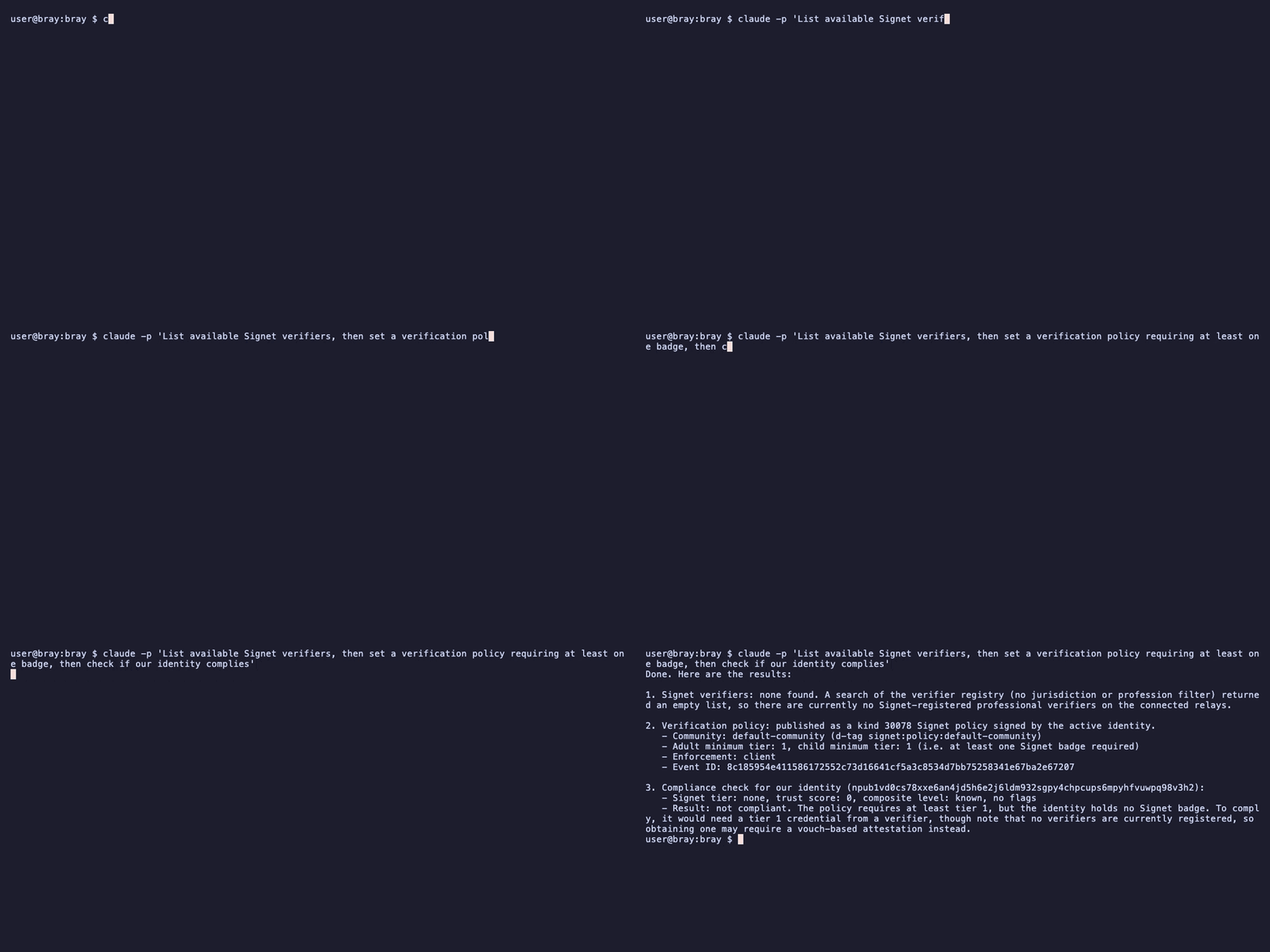
Attestations become useful the moment something enforces them. A verification policy is a rule you set, such as requiring at least one badge from a verifier you recognise, and a compliance check is the yes-or-no answer for any identity against that rule. A community can gate membership on it; an agent can gate conversations on it.
ANONYMOUS GROUP PROOFS
Sometimes the honest statement is: one of us says this, and you may not know which. A whistle-blower inside a team, an anonymous endorsement from a board, a vote where membership is public but positions are private. A ring signature proves that the signer belongs to a listed group of keys without revealing which member signed, and anyone can verify both halves of that sentence.
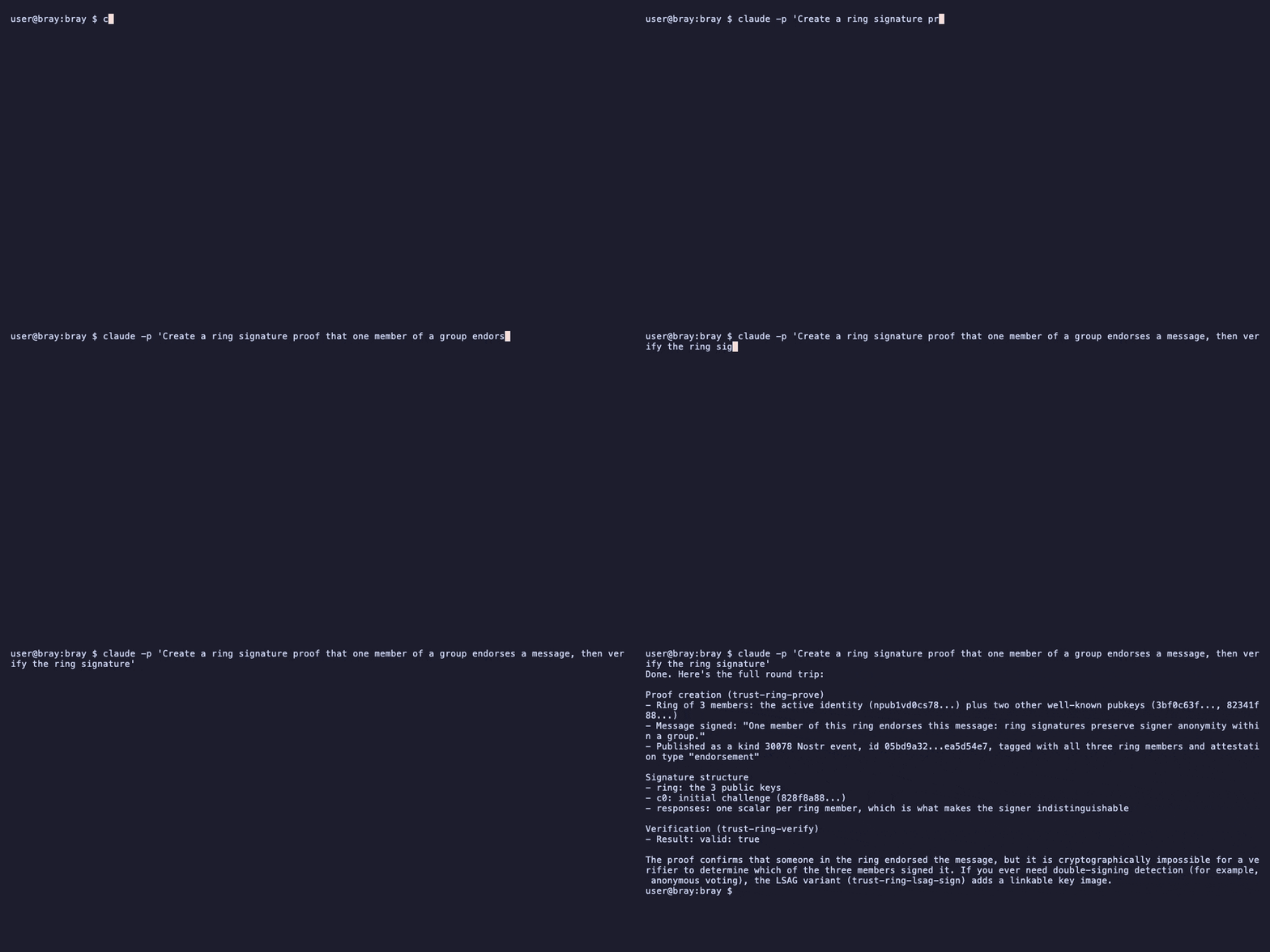
The linkable variant adds one property: two signatures from the same hidden member can be recognised as the same member, still without naming them, which is what stops one person voting twice.
FACE TO FACE
Keys verify keys, but sooner or later two people stand in the same room and need to know the npub and the human match. A spoken verification token turns that into a short exchange of ordinary words: one side generates a challenge tied to their key and the moment, says it aloud, and the other side checks it. No screens shared, nothing typed into anyone else's device.
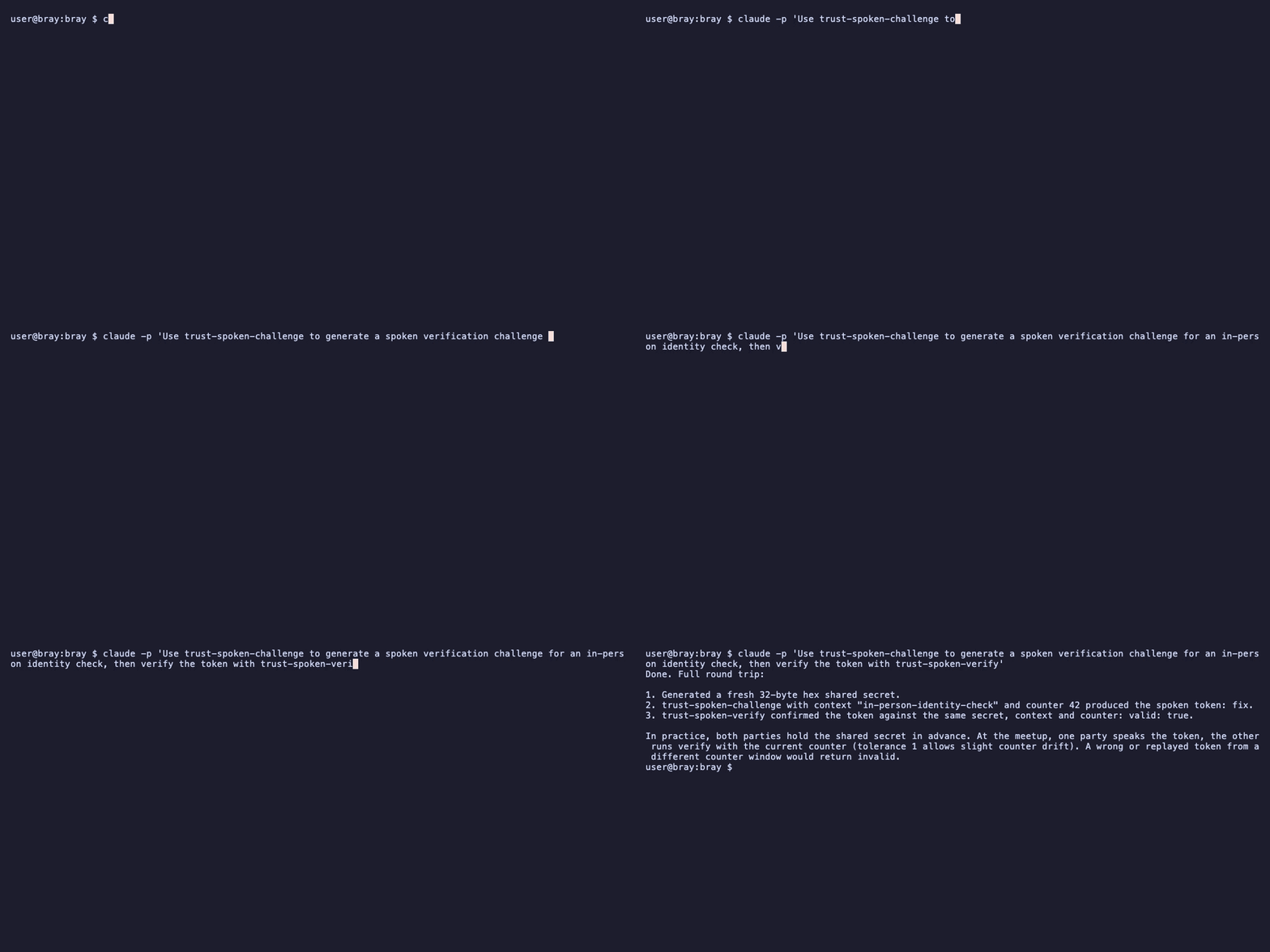
PROVING WITHOUT REVEALING
Most proofs overshare. Showing a passport to prove you are over 18 reveals your name, your birthday and your document number to someone who needed one bit of information. Bray carries the cryptographic fix: commit to a value, then prove statements about it, such as that it clears a threshold or sits in a range, without the value itself ever appearing.
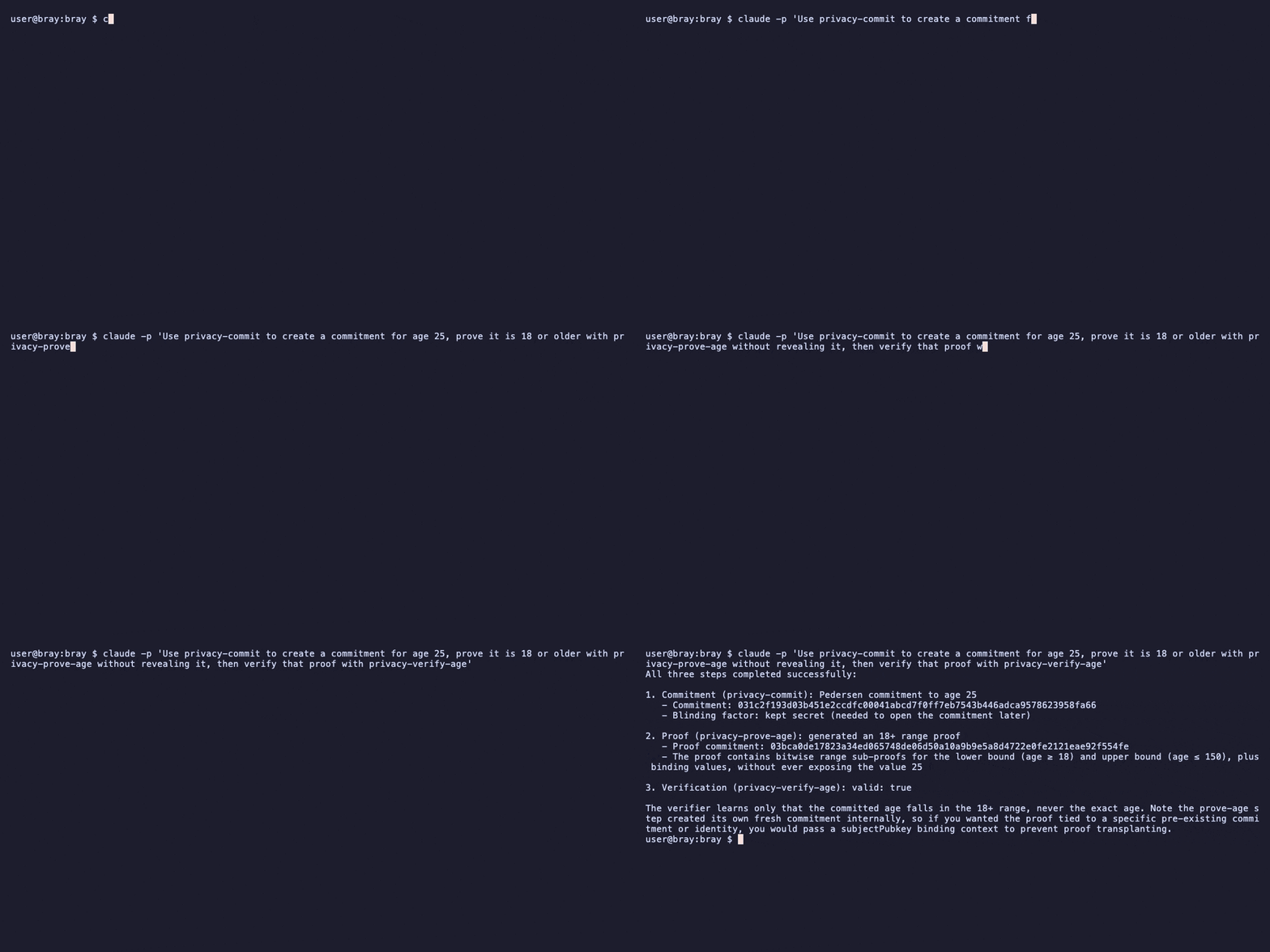
The same shape covers a balance that exceeds a deposit, a reputation above a bar, an age within a bracket. The verifier learns the answer to their question and nothing else.
ENCRYPTED CIRCLES
Public post or private message: Nostr's two native settings. The middle, sharing with a defined circle, is what a vault provides. Content is encrypted into tiers, members hold keys to their tier, and the ciphertext can sit on any relay because relays only ever carry ciphertext. There is no server deciding who is in; the mathematics decides.
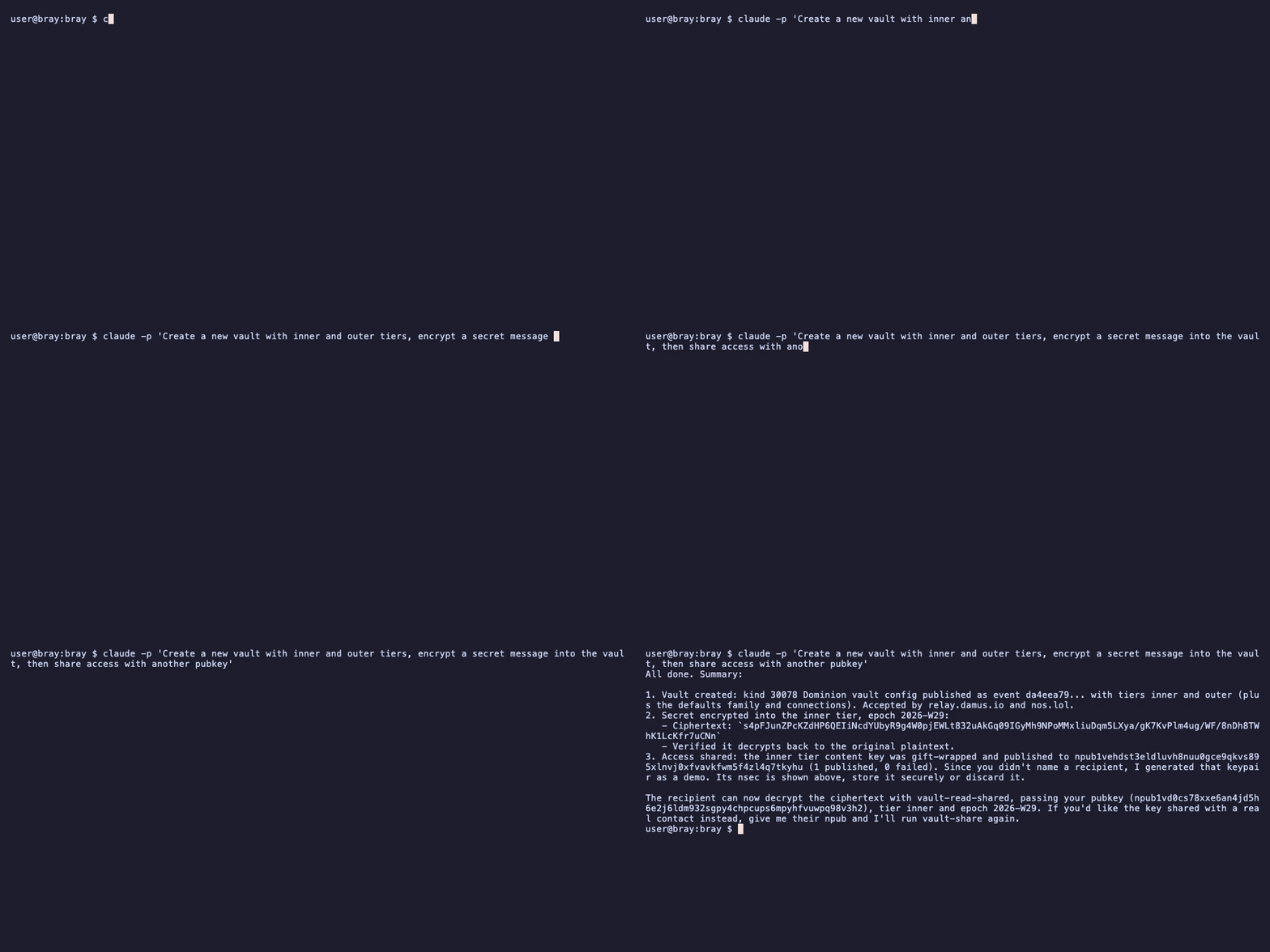
Membership changes are key changes. Keys rotate on a schedule, and revoking someone means the next rotation simply excludes them: they keep what they could already read, and nothing after. An inner tier for the crew and an outer tier for members is one vault, not two systems.
UNDER PRESSURE
The hardest threat model is a person, standing over you, requiring you to comply. Bray's safety tools assume that day and prepare for it in two ways.
A canary is a routine, signed sign of life: a session you renew, a beacon you check in with, a group where a team confirms each other. Silence, or the wrong signal, is detectable by the people you chose in advance. Nothing about a healthy canary looks unusual, which is what makes an unhealthy one loud.
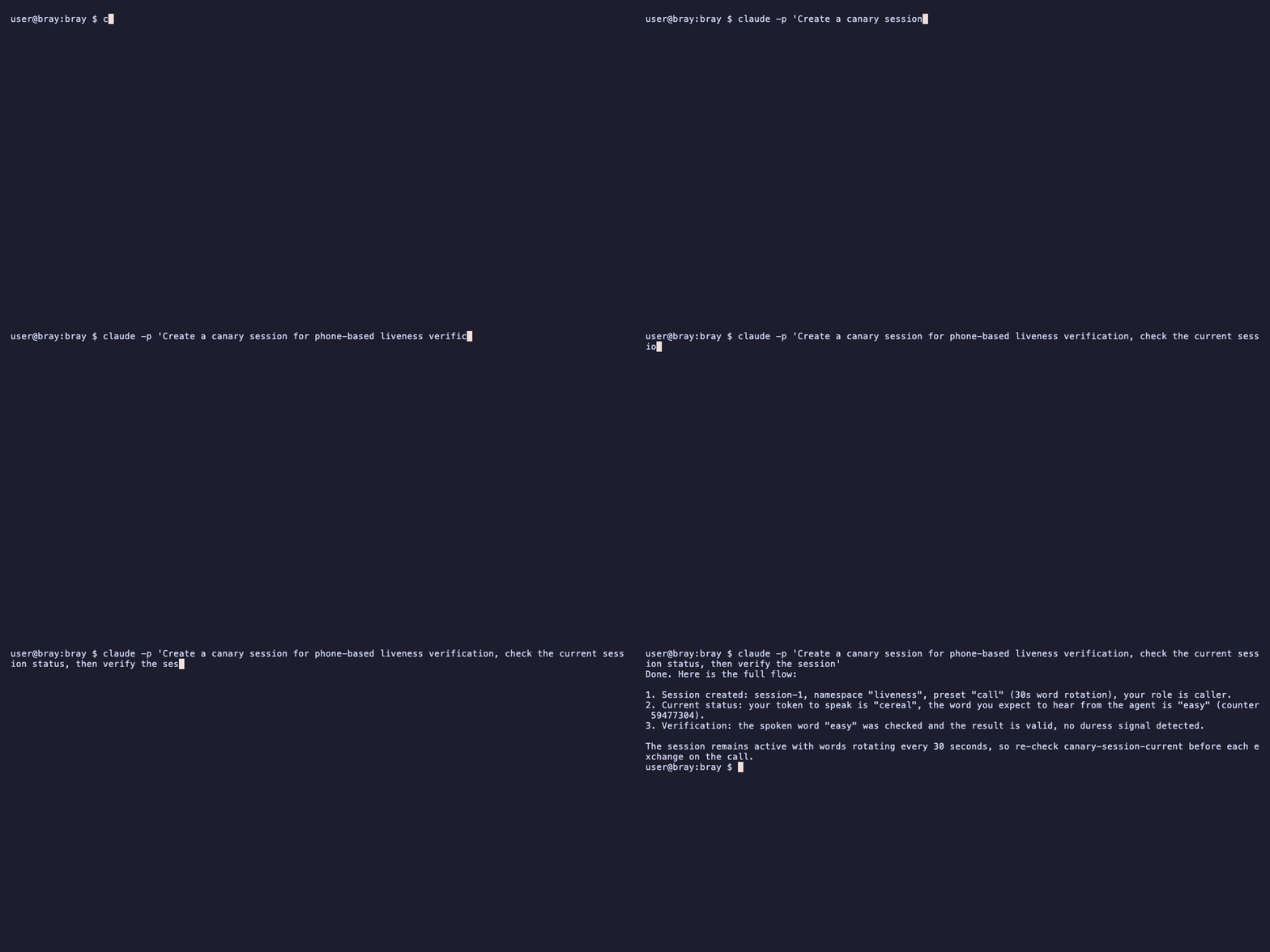
A duress persona is the second preparation: an alternative identity that activates under coercion and is indistinguishable from an ordinary persona switch. You comply, something plausible is handed over, and the act of handing it over is itself the alarm to those equipped to hear it.
THE PROTOCOLS UNDERNEATH
- Signet
- The verification protocol: badges, vouches, challenges and policy, in four tiers from self-declaration to cryptographic attestation. signet
- Dominion
- Epoch-based encrypted access control behind vaults: tiered keys, scheduled rotation, instant revocation. dominion
- Ring signatures
- SAG and linkable LSAG signatures on secp256k1, the mathematics of section 05. ring-sig
- Attestations
- Signed, revocable claims (NIP-VA, kind 31000) that carry vouches and verification. nostr-attestations
- Canary and spoken tokens
- Liveness and duress detection, and human-speakable verification. canary-kit and spoken-token
New here? The getting started guide is the gentler door: identity, backup, profile and the everyday rhythm, before any of the above.